Where Vision Meets Voice
September
Vol. I · No. 01
2026
Evolution
ICONto Watch in2026CEO & Chief
Evolution Officer
Advisors
The strategist rebuilding the commercial engine for how people actually buy in 2026
The September Issue
theprimecrest.com

Opening the issue

Where Vision Meets Voice
September
Vol. I · No. 01
2026
CEO & Chief
Evolution Officer
The strategist rebuilding the commercial engine for how people actually buy in 2026
The September Issue
theprimecrest.com

From the desk · September 2026
Editorial
“Sales is merely the effect, the final leg of the entire commercial engine.”
Vineet Trakroo, CEO & Chief Evolution Officer, Evolution Strategy Advisors LLP, on the first page of an eleven-page conversation.
In this edition
The September Issue. One conversation about growth, execution, consumer insight and future readiness, printed in the order it was answered, with the working method drawn out around it.

Most companies do not stall because nobody wrote a strategy. They stall because the strategy was the easy part. The document gets approved, the deck is circulated, the quarter is named, and then the organisation goes back to doing what it already knows how to do. That gap, between the plan on the page and the behaviour on the floor, is the subject of this edition.
We look for leaders who work inside that gap. Vineet Trakroo has spent a career there. As CEO and Chief Evolution Officer of Evolution Strategy Advisors LLP, he is called in when a commercial number stops behaving, when a top line softens, when a category thins, when a sales force is visibly busy and the result is stubbornly flat. His diagnosis rarely begins where the alarm was raised. Sales, he says, is merely the effect: the final leg of a much longer engine.
That single sentence reorganises a great deal of thinking. If the number is an effect, then arguing about the number is a wasted quarter. The work sits upstream, in culture, in leadership clarity, in a strategic choice made three years ago, in a delivery process nobody owns, in a customer experience that quietly costs more than it earns. Across FMCG, automobiles, pharma, consumer products and building materials, and more than a hundred brands, he keeps finding the same thing: the evidence was already in the file. Somebody simply had to look deeper.
With this September issue, PrimeCrest publishes leaders whose method is worth copying, not only their results. Our cover subject makes an uncomfortable case: that strategy is ten percent of the effort and execution is the other ninety; that deciding what not to do is the most important call a chief executive ever makes; and that today’s revenue can be an illusion held up by yesterday’s distribution, a kind economy, or a weak competitor.
What makes the argument worth a whole edition is that it is falsifiable. Ask any commercial leader when their key performance indicators were last rewritten, how much of the business now arrives through a digital channel, and whether those two numbers agree. Ask how a dealer’s complaint travels from a counter in a tier-three town to a slide in a quarterly review, and how much of it survives the journey. Neither question needs a consultant to answer. Both tend to be answered badly.
We printed his answers in the order he gave them. What surrounds them here, the diagnostics, the ten and the ninety, the iceberg, the road to 2030, is our reading of a working method, not a rewrite of it. Where he named an example, we kept it. Where he declined to dress a failure up as a tragedy, we kept that too, because the sentence he used instead is the better one: in business there are no pure mistakes, only learnings.
If your own number is short this quarter, the most useful page in this issue may be the one that tells you where to stop looking.
Read it slowly. Then go and audit the ground.
The Editors
PrimeCrest Editorial Desk


Credits
hello@theprimecrest.com
September, 2026
Fortiora Group LLC
30 N Gould St Ste R, Sheridan, WY 82801, United States
Email: Hello@thefortiora.com
For subscription: theprimecrest.com
On the cover
Vineet Trakroo, photographed at the Evolution Strategy Advisors office. Portrait supplied by the subject and used with permission for this edition. Cover type set in Bodoni Moda and Jost; text in Spectral. Composed on a 840 × 1120 digital canvas.
This edition

The September Issue · 2026 · PrimeCrest

The
Signature
Story
How to tell a strategy problem from a structural one, and why the second takes longer to fix
11Why under a tenth of frontline friction ever reaches the board, and what that costs a quarter
15The few commercial drivers that move an Indian B2C number, executed with rigour
20Also in this edition
The signature story · one
Vineet Trakroo on why a short top line is almost never a top-line problem, and what the data already knows.
A sales figure is the most public number a company owns and the least useful place to begin an investigation. It is printed, circulated, compared and defended, and by the time it comes in short, the decisions that made it short are already months old. Vineet Trakroo, CEO and Chief Evolution Officer of Evolution Strategy Advisors LLP, treats it as the end of a chain rather than the start of one. “Sales is merely the effect, the final leg of the entire commercial engine.”
That framing changes what a review meeting is for. If figures fall short of targets, the useful response is not a marketing plan but a rigorous inquiry into underlying root causes. Multiple functions contribute to a commercial result, which means the bottleneck rarely sits inside a single department, and almost never inside the one holding the number.
The friction is softer than the org chart
Underneath sluggish numbers he expects deeper organisational friction rather than a single broken process step: misaligned culture, leadership gaps, flawed strategic choices, team competency deficits. Even delivery processes and a poorly designed customer experience can quietly derail top-line momentum for years without ever appearing as a line item. Nobody signs off on losing a buyer at the third touchpoint. It simply happens, repeatedly, in a place where no report is generated.
The story is already in the file
The compensation is that modern organisations generate rich departmental data, which makes diagnostic discovery far faster than it used to be. Operational friction shows itself if you go looking, whether the drag comes from supply chain inefficiency, customer satisfaction drop-offs, or poor sales productivity. “The real story is always in the data; leadership just needs to look deeper.”
Yesterday’s metrics, today’s buyer
The second failure is measurement. Many legacy, brick-and-mortar companies still evaluate their teams on key performance indicators designed for how business was conducted two to three decades ago. Meanwhile a great many enterprises now take thirty to fifty percent of their business from digital channels, and digital is where the incremental growth resides. When the scoreboard predates the market, effort concentrates in the wrong place and the shortfall reads like a motivation problem. It is a metrics problem. Departmental performance measures, he argues, have to be comprehensively revamped to reflect the commercial reality the company is actually operating in.
It also explains a boardroom pattern that reads, from outside, as impatience. Established brands are increasingly replacing chief executives; boards, in his account, are trying to align an operating model with how younger demographics buy, not swapping personalities.
Sales is merely the effect, the final leg of the entire commercial engine. If the figure is short, the work is upstream.
PrimeCrest · SeptemberThe signature story05

Vineet Trakroo · Evolution Strategy Advisors LLP · 2026
The subject
Four watchwords, one brief. He has carried it across FMCG, automobiles, pharma, consumer products and building materials, and more than a hundred brands.
The rooms of the work

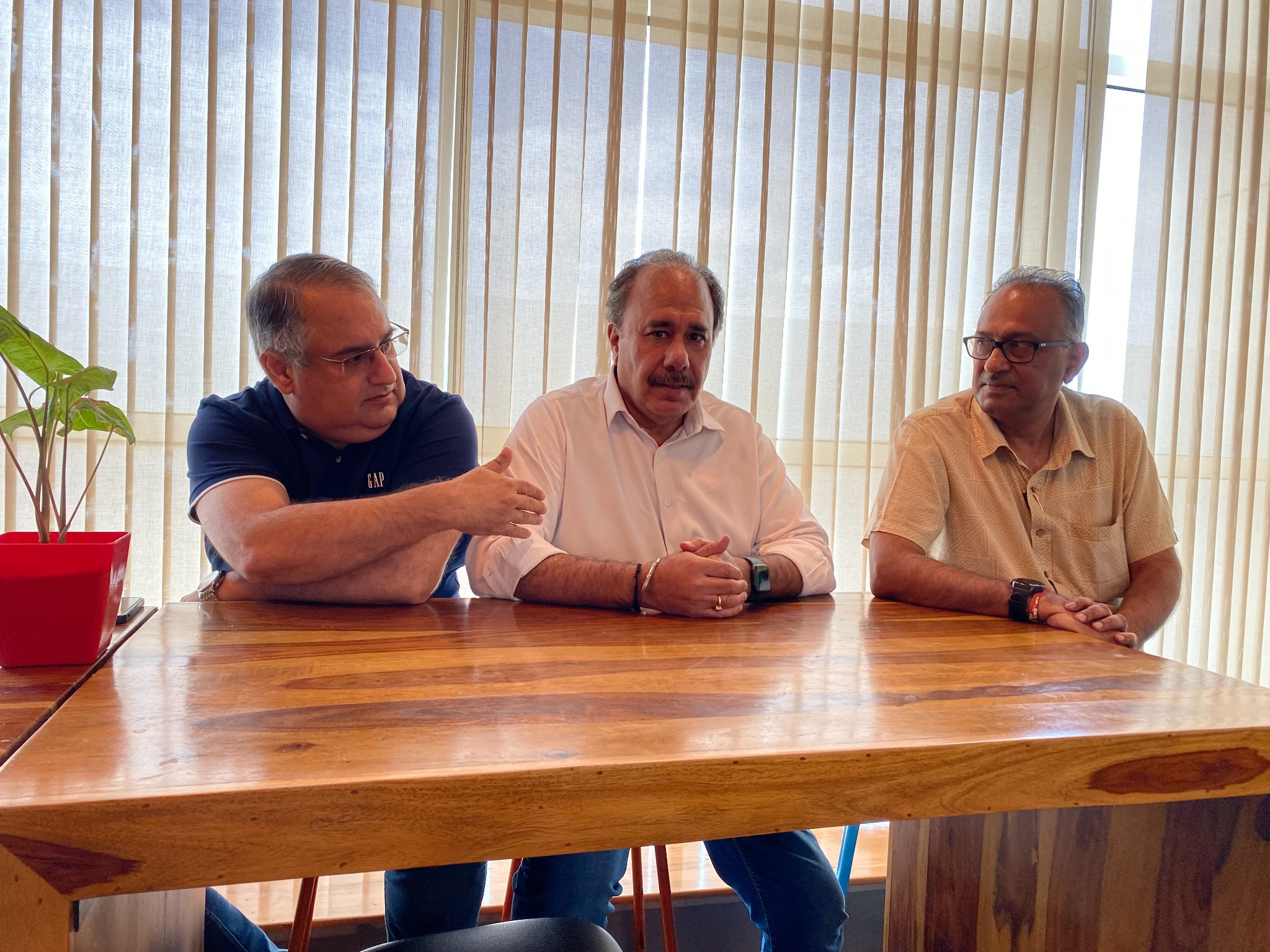
The advisory table, mid-diagnosis. The first question is always the naive one.01


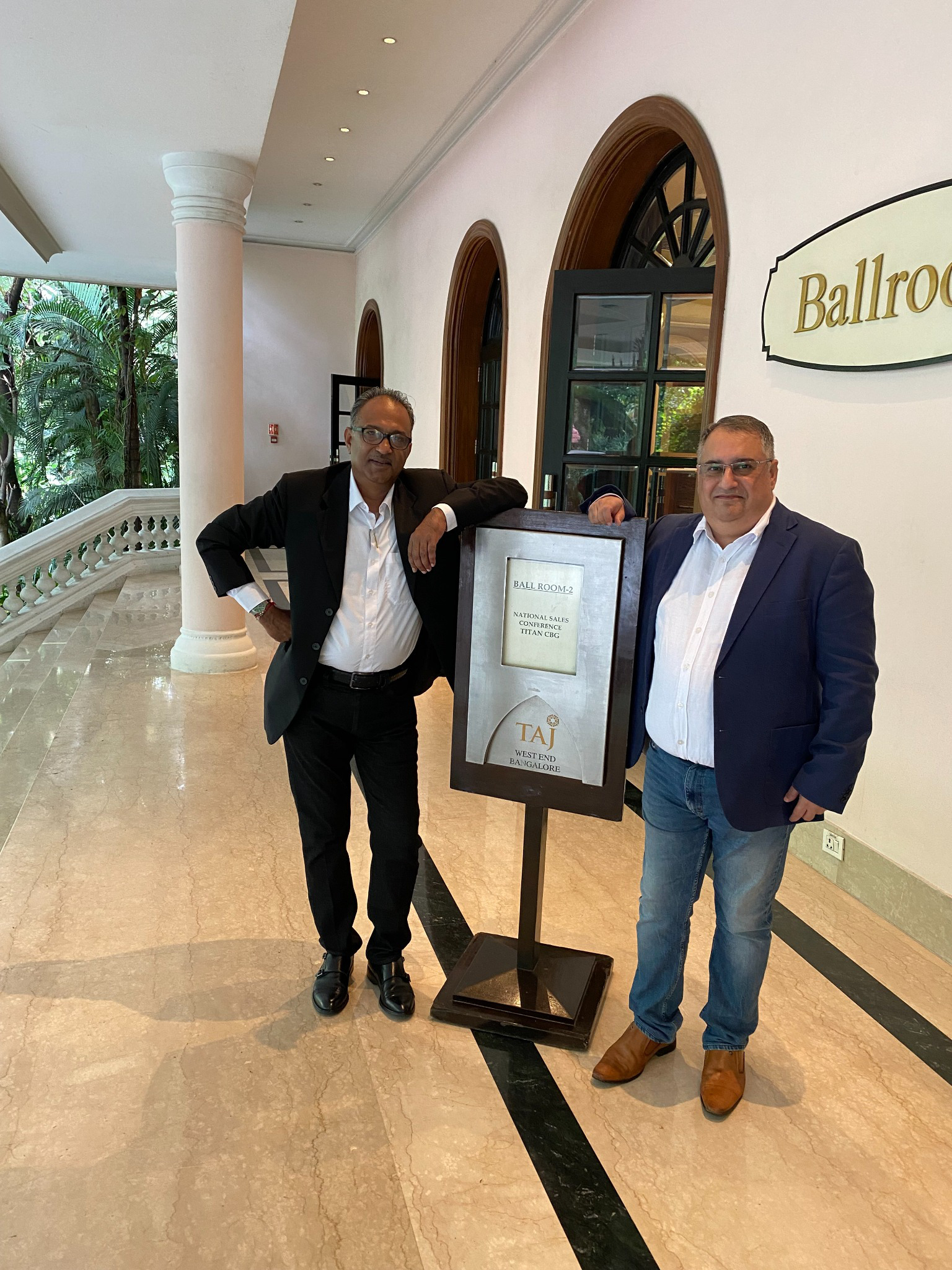
The conference circuit, where the room hears it firstThe partners, at the desks where the work sits02 · 03
What are we selling, to whom, and has it become a commodity?
PrimeCrest · SeptemberThe rooms of the work07
The signature story · two
The first diagnostic question is deliberately naive. The answers are rarely comfortable.
When a large B2C business begins losing growth momentum, the question he asks first is foundational rather than clever: what are we selling, to whom, and has it become a commodity? In most cases the honest answer is that product differentiation has eroded. Consumers today are highly informed. They scrutinise ingredient decks and verify efficacy claims, and even category-defining brands have lost significant market share on that shift. Entire categories, fairness creams among them, have faced massive corrections driven by evolving consumer and social awareness, not by a competitor out-advertising them. If the offering no longer has a reason that survives a phone screen, no amount of spend will put the number back.
Then the weather outside
Beyond the product itself he evaluates the operating environment for seismic shifts. Rapid technological advance, even before the full impact of AI is priced in, can render an existing value proposition obsolete overnight. Shifting trade barriers and supply-chain volatility can close a core market and send a plan back to the drawing board. Generations X, Y, Z and Alpha consume, evaluate and purchase through entirely different journeys, resetting expectations of distribution speed and convenience. And demand generation itself, the traditional B2C machinery of advertising, media planning and creative messaging, is navigating its own existential crossroads.
The real question for leadership, in his words, is organisational agility: has the business adapted to these disruptions, or is it executing a decade-old playbook? All four traditional Ps of marketing are being redefined at once, which is a harder problem than any single one of them failing.
A board that looks like impatience
This is why established brands are increasingly replacing chief executives. In his account the swap is not a personality contest. Boards have recognised that the operating model no longer matches how younger demographics buy, and they are trying to buy that alignment in a chair. It is a blunt instrument. It is also, often, the only one they still trust.
The same logic runs in reverse for the digital-first challengers. Excellent online, they find that pushing the same products through traditional offline channels introduces severe margin and distribution challenges that often prove unprofitable without a strategic restructuring. One house is living on a digital funnel. The other is living on a van and a scheme. Neither playbook travels cleanly across the aisle, which is why a company can look healthy in one channel and already be leaking in the other. Yesterday’s moats, formulation, exclusive distribution, heavy spend, price, are all under active challenge at once. That is the weather he wants a board to name before it names a new chief executive.
Yesterday’s moats, under active challenge
A recipe is readable and a claim is checkable. Differentiation that used to live in the lab now has to survive a phone screen in the aisle.
Shelf control matters less when the shelf is a search result and the warehouse belongs to somebody else’s platform.
Outspending the challenger stopped being a defence when attention stopped being purchasable in bulk.
Informed buyers compare before they reach the counter. A premium now needs a reason that survives the comparison.
PrimeCrest · SeptemberWhen the momentum goes08
Fortiora Group · Applied AI
Your commercial engine leaks where nobody is listening, the call that rang out at 9:40 pm, the dealer who wanted stock and got a voicemail, the quote that went cold over a weekend. We build the layer that answers, qualifies and books, in your brand’s voice, with the context intact.
Scan the QR code
Book a pilotBecause every unanswered call is marginBuilt for the commercial engine
Custom-built on your data, your telephony and your CRM, then measured on the only thing that matters: recovered revenue per rupee of spend.
Agents that qualify a lead, quote from live price masters, book the site visit and escalate cleanly. Every call transcribed, scored and filed against the account.
Deployed in weeks · your numbers, your script
The first customer in distribution-led B2C is the trade. Give them instant answers on stock, schemes, credit and dispatch, in the language the counter actually speaks.
WhatsApp · voice · dealer portal
Not a generic assistant. Workflows built around your operating model, collections, claims, onboarding, after-sales, with approvals and audit trails where they belong.
Private deployment · your cloud or ours
Conversations become structured data: objections, price friction, churn tells, drop-off points. The analytics layer that answers why a buyer left, not just that they did.
Board-ready dashboards, weekly

Hello@thefortiora.com
thefortiora.com · Sheridan, Wyoming
An advertisement by the publisher of PrimeCrest
Diagnosis
Where the thinking happensWhere the result is decided
The distinction he draws first is the one most review meetings blur. A growth problem is strategic: it is tied to market headroom, category choices and positioning, and it can often be solved through tactical pivots with fast turnarounds, followed by a robust go-to-market that builds enduring value. Hit fifty percent share in a mature segment and headroom naturally diminishes; finding new growth then means targeting entirely new customer segments rather than pushing harder at the same ones.
An execution problem is systemic. It is a structural leak in the bucket. If sales productivity is chronically low, the issue is operational, and fixing it takes significantly longer because it requires re-engineering infrastructure, implementing new standard operating procedures, and driving genuine organisational adoption. The two are interdependent, which is why the diagnosis matters so much: a brilliant strategic growth thesis will fail if the execution engine cannot deliver.
What repeats across five industries
Having worked FMCG, automobiles, pharma, consumer products and building materials, he finds the most universal commercial bottlenecks rooted in execution breakdowns. They stem from poor strategic guidance, a lack of clear prioritisation, capability gaps, and the absence of crisp operating frameworks, the same four, in categories that otherwise share almost nothing.
The communication disconnect
Internal communication is often surprisingly weak. Frontline sales teams rarely have absolute clarity on priorities, so they do their best with what they know. More consequentially, on-the-ground market friction rarely makes it up to executive leadership unfiltered, which leaves boardroom decisions resting on assumptions that expired two quarters ago.
Timely in-market diagnostics
Practical execution friction is inevitable. The differentiator between winning and losing companies is how frequently leadership audits ground realities and implements timely corrections. Planning has to be anchored in ground-level market realities, sales-force competencies and channel partner incentives, not in the version of the market that exists in the plan.
The first customer is the trade
Consumer-centricity is vital, but distribution-led B2C businesses must remember that the distributor, stockist, dealer or retailer is the first customer to satisfy. If channel partners are not aligned, incentivised and supported, the product will never reach the consumer effectively, however good the consumer campaign.
“A growth problem is strategic. An execution problem is a structural leak in the bucket. Fixing the leak takes longer.”
PrimeCrest · SeptemberGrowth or leak11
Portfolio · the balcony
Photographs supplied with the feature package, reproduced whole, the full frame, as shot, nothing trimmed to fit a grid.


PrimeCrest · SeptemberPortfolio12
The file
The ten questions, in the order they were asked

PrimeCrest · SeptemberThe file13
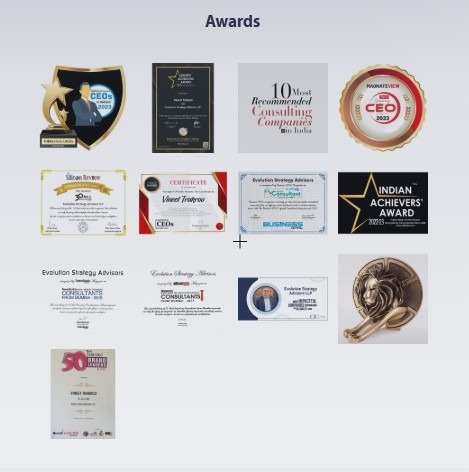
Recognition
Reproduced from the feature package. The references below are the contributor’s own.

Recognition image · supplied with the feature
On the record
PrimeCrest prints what it is given and says so. The plate opposite arrived with the feature materials as a single recognition image; the two references beneath it were supplied by the contributor as the place where the awards themselves are listed. Individual honours have not been independently verified for this edition, and we would rather write that line than imply a check we did not run.
It is a small discipline, and it belongs in an issue about execution. The subject’s own argument is that leadership operates in a vacuum when information thins on its way upstairs, that under a tenth of what happens on the ground survives the trip. A magazine is not exempt from its own cover story.
References
“In business, there are no pure mistakes, only learnings.”
PrimeCrest · SeptemberRecognition14
Why strategies fail
Strategy is a tenth of the effort. The other ninety is a communication problem wearing an operational disguise.
In terms of organisational effort, he puts the split at ten and ninety. Strategy is ten percent; execution is the rest. Even a sound strategy fails when execution is neglected, and the failure modes are depressingly consistent from company to company.
The business-as-usual trap
Teams default to comfortable routines. Actions become unthinking muscle memory rather than active responses to a market that has moved. The plan is not abandoned; it is simply overtaken by habit, one uneventful week at a time.
Organisational blind spots
Teams operating too close to daily operations frequently miss the structural problem forming underneath them. Proximity is not the same as visibility, and a busy quarter is an excellent place to hide a developing category shift.
The iceberg effect
As the management theorist Sidney Yoshida pointed out, less than ten percent of frontline operational problems ever reach top management. Feedback from dealers and frontline sales teams gets diluted like a game of telephone on its way to headquarters, and leadership ends up operating in a vacuum, confident, well briefed, and wrong.
Data without actionable analytics
The failure is bidirectional by company size. Smaller companies under-invest in understanding why their products are chosen or rejected at all. Larger enterprises drown in digitised sales data yet lack the analytical rigour to identify where customers drop out of the purchase journey. Both end up with a number and no explanation.
PrimeCrest · SeptemberThe iceberg effect15

The ninety
Dealer and sales-floor reality gets diluted like a game of telephone on the route to headquarters. The differentiator, he says, is how often leadership goes and audits the ground itself.
Supplied portfolio · reproduced full frame
Consumer insight
Converting research into commercial growth requires an institutionalised, repeatable process, not a better deck.
Expectations do not stand still while a product is being used. As consumers live with a product or service over time, their needs evolve from the primary functional job it was bought to do toward secondary conveniences: packaging functionality, dosage precision, the way the thing fits into a life. Continuous usage-and-attitude tracking is what keeps a company aware of that drift, and it is the input that fine-tunes marketing mix, product design and delivery formats before a competitor notices the same gap.
From a deck to a pipeline
The failure he names is organisational rather than analytical. Market research must not sit inside the marketing department as an academic deck. Leading enterprises maintain structured new-product-development and innovation pipelines whose explicit job is to translate customer feedback into packaging changes, SKU variants, or entirely new offerings. The insight is not the asset; the pipeline that converts it is.
Executing the adaptation
Where internal teams struggle to translate research data into commercialised offerings, he argues that leveraging external advisory frameworks can accelerate pipeline execution and market launch. That is, in effect, a description of his own brief: not to produce another study, but to move a finding through an organisation until it arrives on a shelf as something a buyer can choose.
The test is unsentimental. If a quarter of research produced no pack change, no variant, no new format and no retired SKU, the research did not happen, a report happened. The difference between the two is the whole of this page.
Insight to offering · the repeatable loop
Usage and attitude, continuously, not once a launch.
Why chosen, why rejected, where the buyer dropped out.
A structured NPD queue that owns the finding.
Pack, dosage, SKU variant, or a new line entirely.
Result returns to the mix. The loop closes.
PrimeCrest · SeptemberConsumer insight17
Portfolio · the rooms
Boardroom, table, chair. The unglamorous geography of an in-market audit, and the rooms where a priority stack gets cut down to the few drivers that move a number.


PrimeCrest · SeptemberPortfolio18
Fortiora Group · Advertisement
Enterprises measure sales productivity and still lose the top line in the gaps between people, after hours, at peak, on the third follow-up, in the language the customer actually speaks. Fortiora builds custom AI voice and copilot systems that close those gaps and report what they found. No generic assistant, no pilot that dies in procurement: a system wired into your telephony, your price masters and your CRM, with an owner and a number attached.
Every missed call, abandoned quote and dormant account, worked to a rule.
Recovered pipeline, weekly
Objections, price friction and churn tells, extracted from real conversations.
Straight to the board pack
Dealers and frontline teams answered in seconds, in the register of the counter.
Fewer escalations, faster orders
Scan to start
Book a pilotCustom AI, built on your commercial reality
Hello@thefortiora.com
thefortiora.com
30 N Gould St Ste R, Sheridan, WY 82801
Future readiness
Current revenue growth does not equal future readiness. One of them can be borrowed.
Current top-line growth, he warns, can easily be an illusion sustained by historical distribution moats, broad economic tailwinds, or weak competitors. None of those three are capabilities. All three can be withdrawn without notice, and a company that mistook them for competence discovers the difference in a single bad year.
The agility gap
Consider legacy giants with near-monopolistic distribution and marketing muscle competing against new-age players. A digital-native brand such as Mamaearth achieved scale rapidly, outpacing long-standing legacy brands in specific segments despite having none of the legacy distribution infrastructure. One company is growing on historical momentum; the other was built for the modern consumer journey. From a distance the growth lines can look similar. They are not the same asset.
Borrowed capability is a signal
When a global legacy FMCG powerhouse has to lean on a D2C partner to manage digital marketing for its own legacy personal-care portfolio, he reads it as a symptom rather than a partnership: a deeper struggle to build internal, future-ready capability. The media plan is fine. The capability gap is the story.
What future-ready actually means
A future-ready organisation, in his account, is deeply customer-centric. It systematically maps shifts in consumer journeys and leverages modern technology and AI to deliver hyper-personalised value propositions. That agility, not a platform purchase, is the foundation of sustainable long-term compounding.
Through 2030
Building sustainable growth by 2030 requires one core capability: the institutional agility to continuously sense and respond to internal and external change. It shows up as relentless focus, because sustainable success does not come from doing everything; it comes from identifying the few commercial drivers that truly move the needle and executing them with extreme rigour. It shows up as active environmental scanning, with leadership monitoring market shifts, technological disruption and evolving customer journeys, and willing to reshape the operating model to drive customer delight. And it shows up as customer obsession held as the north star. Restructuring hierarchies, modifying culture and adopting advanced digital platforms are enablers. In an era where product features commoditise rapidly, the ultimate source of enterprise value remains the customer’s end-to-end journey, usage experience and overall satisfaction.
Sustainable success comes from identifying the few commercial drivers that truly move the needle, and executing them with extreme rigour.
PrimeCrest · SeptemberThrough 203020
The close
After more than a hundred brands, he refuses to dress a failure up as a tragedy. In business, he says, there are no pure mistakes, only learnings. That said, the single largest gap between sustained market leadership and stagnation is a specific one: failing to adapt offerings and go-to-market models as consumer buying habits evolve. It is not a missing slogan. It is a file that stayed still while the buyer did not.
Assumption versus validation
Tweaking product formulations, packaging or customer touchpoints without direct consumer validation is, in his phrase, a recipe for value destruction. The change feels productive inside the building and arrives in the market as a stranger.
Force-fitting across segments
Designing an offering for one niche and then force-fitting it across divergent consumer segments leads to brand dilution and weak sales. The initial success is real; the extrapolation is what fails.
Diluting strategic capacity
Organisations frequently try to solve too many initiatives at once, creating competing internal priorities. Real transformation requires matching strategic ambition to internal capability constraints and executing systematically, phase by phase, which brings the argument back to the decision he rates above all others.
Deciding what to stop
Deciding what not to do is the single most critical decision a CEO will ever make. It requires ruthless focus, because an organisation cannot pursue multiple high-stakes objectives simultaneously without diluting the quality of all of them. Four disciplines make that survivable. Initiatives are prioritised on maximum impact to core bottom-line outcomes, and the stack is recalibrated quarterly as capabilities mature and bottlenecks clear. Every department rallies around a single shared operational agenda, which is the only reliable cure for siloed cross-purposes. Advanced analytics are used to surface frontline sales friction, channel margin pain points and strategic execution gaps. And internal capability is benchmarked honestly against industry leaders, while remembering that sophisticated frameworks and analytics are useless without a high-performance culture committed to accountability and delivery.
Match the ambition to the capability. Then execute, phase by phase.
Vineet Trakroo
CEO & Chief Evolution Officer · Evolution Strategy Advisors LLP

PrimeCrest · SeptemberThe close21

PrimeCrest · house page
The Next
PrimeCrest publishes leaders whose method is worth reading, not only their results. Every edition is one long conversation, printed in the order it was answered, with the working method drawn out around it. If that is the kind of record you want on file, for a founder, an operator, or a chief executive whose quarter deserves more than a press release, the desk is open.
Get featured in the upcoming edition of PrimeCrest
PrimeCrest · a product of Fortiora Group LLC
hello@theprimecrest.com · theprimecrest.com
30 N Gould St Ste R, Sheridan, WY 82801, United States
Scan the QR code
Register interesttheprimecrest.com
A journal of affairs, business and culture, independent reporting, considered writing, and the people who shape what comes next.

PrimeCrest · a product of Fortiora Group LLC
30 N Gould St Ste R, Sheridan, WY 82801, United States
hello@theprimecrest.com · theprimecrest.com
The September Issue · 2026