November 2026 · Vol. XII · No. 12Where Vision Meets Voice
From Gratitude to Growth:The 3.2.1. Way
Creator of The Leadership Superpower Matrix™ · Author & Keynote Speaker
Senior Healthcare Consultant · Remarkable Unlimited

Opening the issue

November 2026 · Vol. XII · No. 12Where Vision Meets Voice
Creator of The Leadership Superpower Matrix™ · Author & Keynote Speaker
Senior Healthcare Consultant · Remarkable Unlimited


Contents
The November Issue
Vol. XII · No. 12
At the desk, pen in hand. The idea behind 3.2.1. was first typed on a phone.
On the card this month
The Cover Story
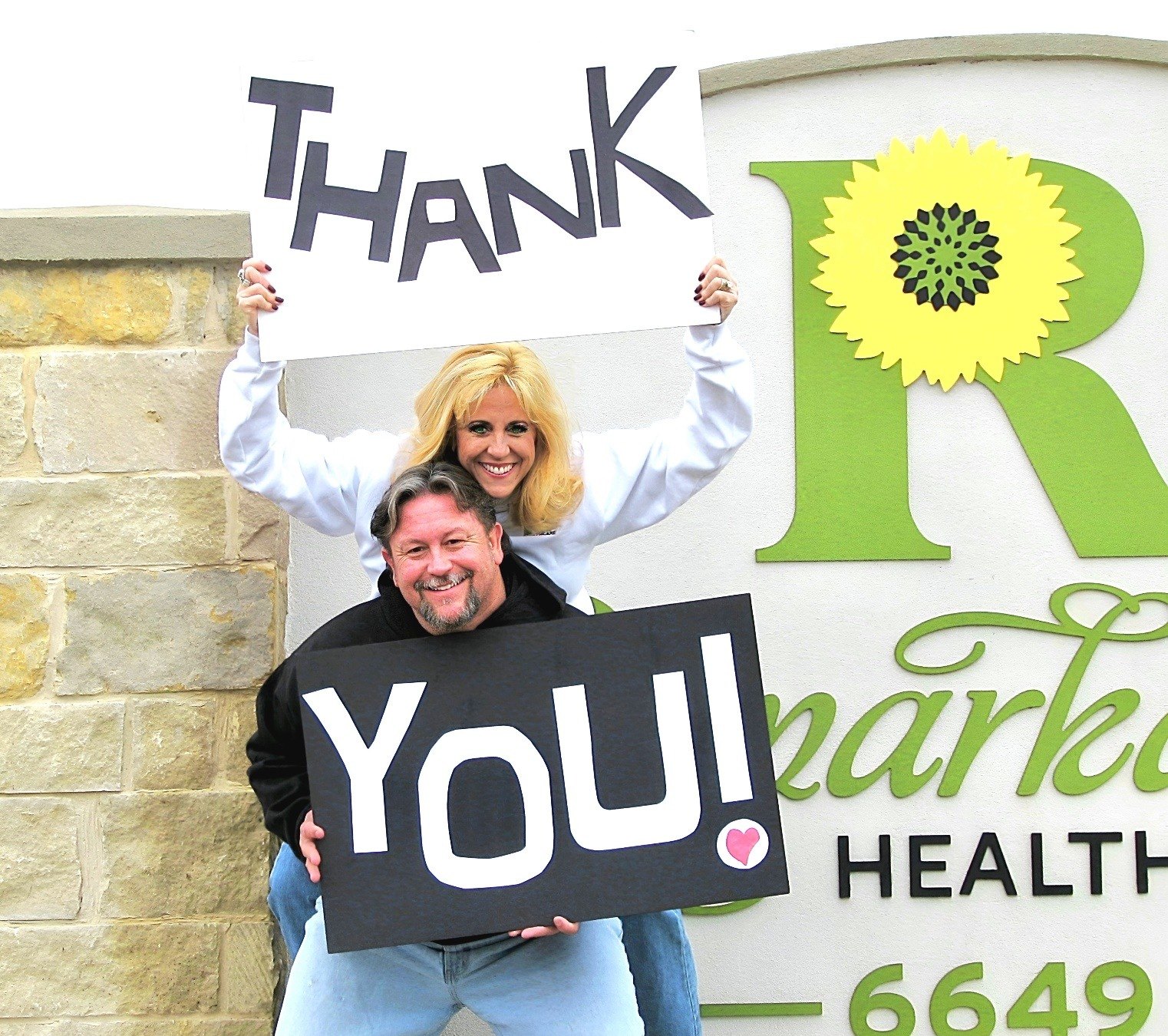
Jon Eric McPike spent nearly four decades in healthcare. He turned a failing hospital around, built companies with his wife, and lost them. What he did next fits in three numbers.
The masthead
Who made this issue, and where to find them.
The method
Solitaire, a U-Haul, and the mantra that turned into a book.
In his words
Eight questions, answered in full and printed in the order we asked them.
The record
From the first job out of high school to The Middle Rounds.
The desk
Put your story on the record in PrimeCrest.
PrimeCrest · November 2026Contents02
The November Issue · Vol. XII · No. 12 · 2026
Corporate Office
Fortiora Group LLC
30 N Gould St Ste R
Sheridan, WY 82801
United States
Hello@thefortiora.com
thefortiora.com


© 2026 Fortiora Group LLC. All rights reserved. No part of this publication may be reproduced or transmitted in any form without prior written permission from the publisher.
PrimeCrest · November 2026Credits03
Fortiora Pulse · Employee engagement
Short pulse surveys your people will actually answer, sentiment you can read week to week, and an action plan on every manager's desk before the next one goes out.
How supported did you feel by your manager this week?
What is one thing that would make next week easier?
Theme rising: “handoffs at shift change”

Fortiora Pulse is built by Fortiora Group LLC
Hello@thefortiora.com · thefortiora.com

The Cover Story · Jon Eric McPike

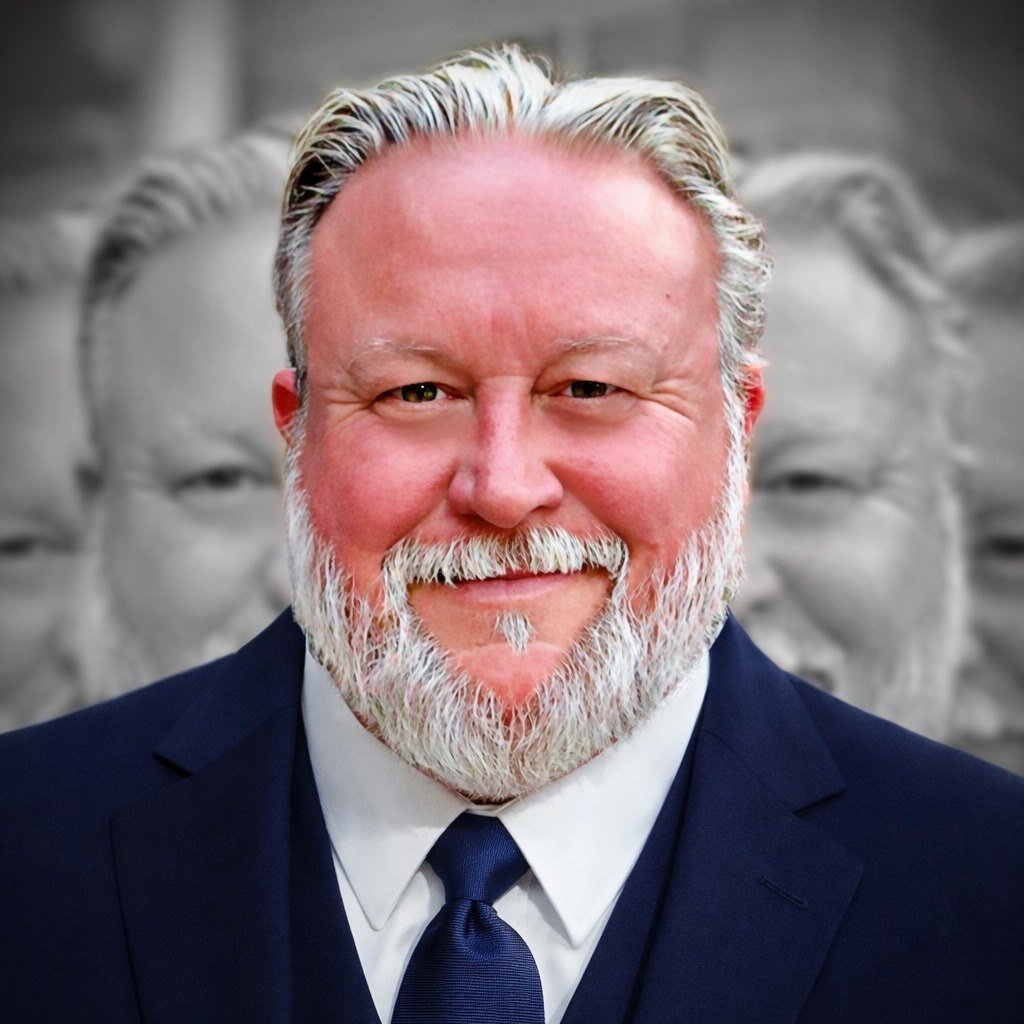
Jon Eric McPike Senior Healthcare Consultant, Remarkable Unlimited. Creator of The Leadership Superpower Matrix™.
Nearly four decades in healthcare. A failing hospital turned into the best in its system, companies built and then lost. Out of the loss came a phrase typed on a phone in the cab of a U-Haul: three gratitudes, two intentions, one bold action.
He was put in charge days after he finished high school. Young, short on experience, and by his own account lucky twice over: in his mentors, and in the caregivers he was sent to lead. Doing the job well opened the next door, and the one after that. Individual facilities. Regional roles. Hospital leadership. Eventually, businesses of his own.
The bad days came with it. One Saturday morning his phone rang with the news that a patient had killed another patient, using the drawer from his bedside table. There is no manual for that call, he says. He drove in. He and the Director of Nursing sat down, looked at what they had, and within minutes there was a plan. The regulatory, clinical, operational and safety work started at once.
Then he did the thing he still talks about. He walked the building and stopped at every employee, one at a time. Do you feel safe. Are you okay. What do you need right now. Some were frightened. Others were simply overwhelmed. All of them were watching him for a sign that someone had a plan.
“Before you can stabilize the organization,” he says, “you have to help stabilize the people.”
The crises changed over the years. Natural disasters, regulators, money, turnarounds and, in time, a pandemic. His habits for them did not. Tell people what you know and what you don't. Set the first priorities. Give them the next eight hours, even when nobody can promise them the next six months.
There is no leadership manual that prepares you for a moment like that.
Jon Eric McPike, on the Saturday morning call
PrimeCrest · November 2026The Cover Story06
The Cover Story · The hospital
The hospital came later. He agreed to become chief executive of what was considered the worst-performing rehabilitation hospital in a national system, and he did not do what new chiefs usually do. He brought in nobody. He kept the leadership team that was already there, because he believed in it.
The building went from worst to first. It became the top performer on virtually every major measure the system kept: patient satisfaction, employee satisfaction, volume, financial performance and regulatory outcomes, including the best licensure survey in the company. Ask him about it and the scorecard is not what he brings up. He talks about people who had given years to the place beginning to believe in themselves again, and realizing their own decisions had done it.
With his wife he then built healthcare businesses of their own, and they grew to $27 million in annual revenue. Again, he says, the revenue was not the accomplishment. The people and the culture were. COVID put that to the test. Their facilities became COVID treatment centers, and their caregivers walked into the most frightening clinical conditions of their working lives. Among the COVID patients they treated, the recovery rate was 96 percent.
Then the companies were gone. There was bankruptcy, and litigation, and a long fight to keep what they had built against organizations with far deeper pockets. They lost anyway. Sometimes in business, he says, determination alone isn't enough. Losing something that had consumed so much of their lives was, in his words, a tremendous blow, both professionally and personally.
Success taught me how to lead. Crisis taught me how to remain calm and make decisions. Failure and loss taught me humility.
Jon Eric McPike
PrimeCrest · November 2026The Cover Story07

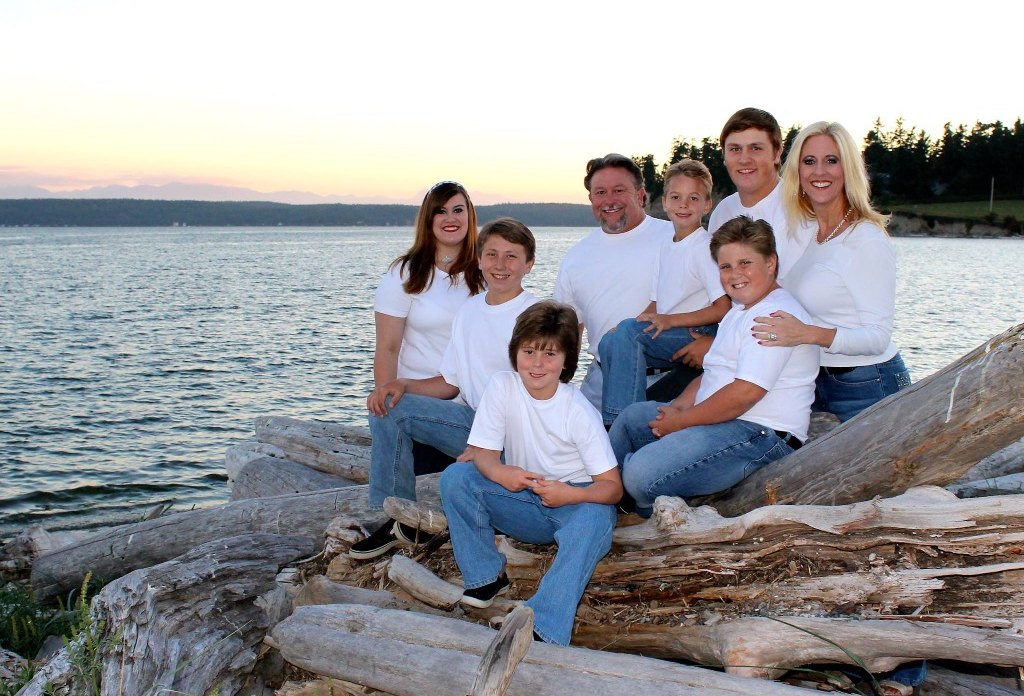
Family, on the driftwood. “I define it by the people I had the privilege to lead.”
The loss took more than a business. It took years of work, a great deal of money, and a piece of who he understood himself to be. He was full of self-doubt, and one question ran on a loop. What do I do now?
The way out began with a question that sounded backwards. He had been telling the story to himself one way only: I lost my companies, I failed. What if it was also an education? Few people, he reasoned, had built companies, led them through success, fought through bankruptcy and litigation, carried them through COVID and still lost them. He could not change any of it. He could change what he did with it.
“Maybe I didn't go through all of this just to get through it,” he says. “Maybe I went through it so I could help someone else get through theirs.”
He does not measure the career by the companies, the revenue or the scorecards. He measures it by the people he led, the patients whose lives touched his, and the teams that did things they had not believed they could.
PrimeCrest · November 2026The Cover Story08

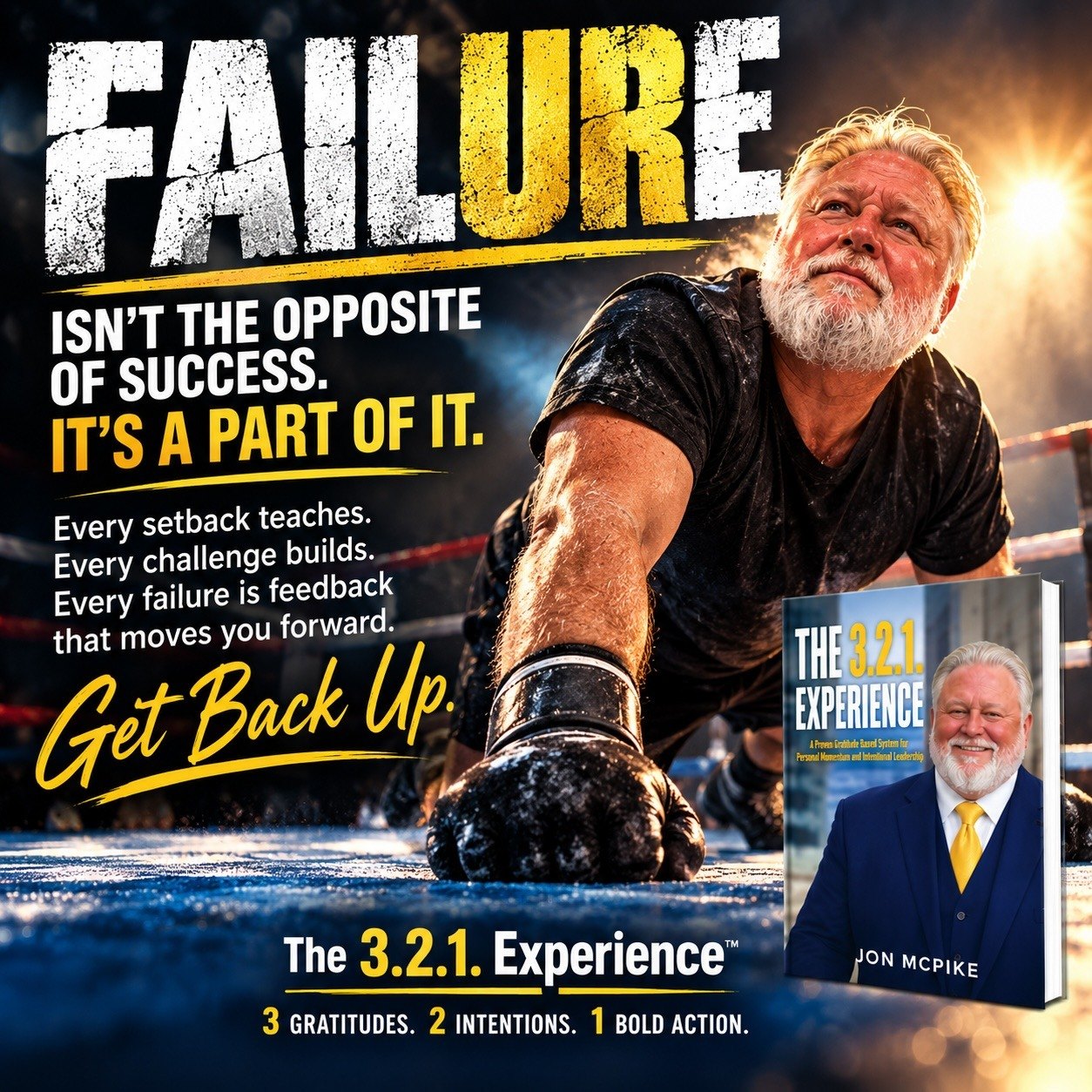
The 3.2.1. Experience™ · The book
Every setback teaches.
Every challenge builds.
Every failure is feedback that moves you forward.
3 Gratitudes. 2 Intentions. 1 Bold Action.
It began with a game of Solitaire he could not finish for nearly a month, and a moment in a U-Haul in South Texas when he knew what 3, 2 and 1 meant. He typed it as fast as he could.
The method
Changing focus through gratitude
“Change what you focus on today.”
Creating direction through intentionality
“You can become intentional about where you're going.”
Changing behavior through bold action
“And you can take one bold action that moves you forward every day.”
He read his way into the neuroscience of gratitude, neuroplasticity and habit formation, not to write a book but to find his own way forward. The book came after. So did the keynotes, the Leadership Superpower Matrix™ and the consulting he now does as Senior Healthcare Consultant at Remarkable Unlimited.
PrimeCrest · November 2026Three. Two. One.10
Leadership and business · 01 of 08
I was thrust into leadership days after graduating from high school. I was young, inexperienced, and had a lot to learn, but I was fortunate to have great mentors and the opportunity to work alongside extraordinary teams of caregivers.
As my career progressed, success opened doors to increasingly larger leadership opportunities, from individual facilities to regional roles, hospital leadership, and eventually entrepreneurship. Along the way, I met remarkable patients who shared incredible life stories with me, and I also experienced crises I never could have imagined, including the tragedy of one patient murdering another patient.
One of the defining opportunities of my career came when I agreed to become CEO of what was considered the worst-performing rehabilitation hospital in a national system. What makes that story especially meaningful to me is that I didn't come in and replace the leadership team. I believed in the people who were already there.
Together, we went from worst to first.
We became the top performer across virtually every major metric: patient satisfaction, employee satisfaction, volume, financial performance, and regulatory outcomes, including the best licensure survey in the company. But the numbers aren't what I remember most. I remember watching employees who had dedicated years of their lives to that hospital begin to believe in themselves again. They developed a sense of pride in what they were accomplishing and realized that their own decisions and bold actions had created something remarkable. That experience profoundly shaped the way I think about leadership today.
Later, as an entrepreneur, my wife and I built healthcare businesses that grew to $27 million in annual revenue. Once again, however, the greatest accomplishment wasn't the revenue. It was the people and the culture we built.
That became especially evident during COVID. Our facilities became COVID treatment centers, and our caregivers willingly stepped into one of the most frightening healthcare environments of our lifetime. Together, we achieved extraordinary clinical outcomes, including a 96% recovery rate among the COVID patients we treated. I witnessed courage, compassion, sacrifice, and leadership at every level of the organization.
Then came one of the most difficult chapters of my professional life.
Despite everything we had built and fought to preserve, we ultimately lost our companies. Sometimes in business, particularly when you're facing organizations with significantly deeper financial resources, determination alone isn't enough. Losing something that had consumed so much of our lives was a tremendous blow, both professionally and personally.
But it also changed me.
Success taught me how to lead. Crisis taught me how to remain calm and make decisions. Failure and loss taught me humility, resilience, perspective, and the importance of separating who you are from what you own or the title you hold.
Looking back over nearly four decades in healthcare, I don't define my career solely by the organizations we built, the revenue we generated, or the performance metrics we achieved. I define it by the people I had the privilege to lead, the patients whose lives touched mine, the teams that accomplished things they didn't initially believe were possible, and the lessons I carried forward from both winning and losing.
Those experiences ultimately shaped the leadership philosophy I have today: remarkable change rarely happens because of one enormous decision. It happens when people begin making small, intentional choices consistently and then find the courage to take the bold action that moves them forward.
My favorite quote is: “In everyone's life comes one undeniable moment of change that never stops mattering.” Terry Kay
PrimeCrest · November 2026The Interview11
Transforming healthcare organizations · 02 of 08
My approach always begins with understanding before changing. Before I recommend a solution, I want to understand the organization's culture, its people, its processes, and where leadership believes the barriers to success exist.
From there, I conduct a deep dive into the financial and operational results. I have always believed that data tells a story. Financial performance can reveal much more than whether an organization is making or losing money. It can point us toward operational inefficiencies, breakdowns in systems, missed opportunities, and areas where execution isn't aligned with strategy. The numbers tell us where to look; then we work with the people closest to the operation to understand why it is happening.
My goal is twofold.
First, we identify operational inefficiencies and system failures and turn them into specific, measurable action plans. I don't want to simply tell an organization what is wrong. I want to help its leaders build scalable systems, establish accountability, identify the right performance indicators, and create a roadmap their team can actually execute long after the consulting engagement ends.
Second, and equally important, is creating momentum within the workforce. You can fix a process on paper, but if your people aren't engaged in the solution, sustainable change is difficult to achieve. That's where I incorporate principles from The 3.2.1. Experience into the organization's leadership and culture. We work on changing focus through gratitude, creating direction through intentionality, and changing behavior through bold action.
Ultimately, I believe successful transformation requires both sides of the equation: better systems and engaged people. When you improve the operation while helping employees believe they have the ability to influence its success, accountability begins to feel less like something being imposed on them and more like something they own.
PrimeCrest · November 2026The Interview12
Fortiora Ops · AI agents for healthcare operations
Fortiora Ops puts AI agents on the operational work that eats a charge nurse's day. They watch the schedule, write the handoff, keep the census current and send the hard calls to the right person. Your leaders stay on the floor.
Spots the open shift, works the float pool and call-out list, and asks a human to approve.
A clean, structured summary waiting at every shift change.
Admissions, discharges and transfers on one live board.
The right issue to the right leader, with the context attached.
Fortiora OpsOperations consoleAgents onShift coverage · Tonight Needs approval
| 4 West · Med-Surg | RN · 19:00 | Offer sent |
| Rehab 2 | CNA · 23:00 | Open |
| Rehab 1 | LVN · 19:00 | Swap pending |
| ED | RN · 07:00 | Covered |
| ICU | RN · 19:00 | Covered |
Handoff summary · 4 West
Census & throughput
AdmDisXfer
Escalation routing · Agent log
Agents do the legwork. People make the call.

Fortiora Ops is built by Fortiora Group LLC
Hello@thefortiora.com · thefortiora.com

Leading through crisis · 03 of 08
Crisis comes in all sizes and shapes, but I can remember my first major crisis as if it happened yesterday. It was a Saturday morning when I received a call that one patient had killed another patient using the drawer from his bedside table.
There is no leadership manual that prepares you for a moment like that.
I immediately went into action. When I arrived at the facility, the Director of Nursing and I met, assessed the situation, and within minutes established a plan of action. Of course, there were regulatory, clinical, operational, and safety issues that had to be addressed immediately. But I also realized something that has stayed with me throughout my career: before you can stabilize the organization, you have to help stabilize the people.
I began walking through the facility and checking on every employee individually. I wanted to know: Do you feel safe? Are you okay? What do you need right now? Some were frightened. Others were overwhelmed. Everyone was looking to me for reassurance that there was a plan and that we were going to get through this together.
That experience fundamentally changed the way I lead through uncertainty.
Over the years, the crises changed (natural disasters, regulatory challenges, financial pressures, organizational turnarounds, and eventually a global pandemic) but the leadership principles remained remarkably consistent.
I've learned that calm and clarity are contagious. Unfortunately, so are panic and confusion. When people don't know what is happening, they naturally fill that information vacuum with fear and speculation. My responsibility is to create clarity and purpose through intention.
That means meeting people where they are, communicating honestly about what we know and what we don't know, establishing immediate priorities, and giving people confidence in the next step. We have to have everyone on the same train going the same direction understanding exactly what the expected outcomes are. You don't have to know exactly what the next six months will look like. Sometimes people simply need to know what we're going to do in the next eight hours.
Ultimately, I've learned that leading through crisis isn't about being fearless. It's about being present, calm, making thoughtful decisions, and demonstrating compassion for the people experiencing the crisis alongside you.
Calm creates confidence. Clarity creates direction. Compassion keeps people together. Those three principles have guided me through some of the most difficult moments of my career.
Calm creates confidence. Clarity creates direction. Compassion keeps people together.
PrimeCrest · November 2026The Interview15
From gratitude to growth · 04 of 08
The 3.2.1. Experience™ was born during one of the darkest periods of my life.
I tell what I call “The Remarkable Story” in the book, but after losing our companies, I was devastated. I wasn't simply dealing with the loss of a business. I was dealing with the loss of something we had spent years building, tremendous financial loss, and a profound sense that a part of my identity had disappeared with it. I was filled with self-doubt and fear, constantly asking myself, “What do I do now?”
During that period, I started playing Solitaire on my phone as a way to quiet my thoughts. And this sounds crazy, but for nearly a month I couldn't seem to get the 3, 2, and Ace I needed to finish a game. I am extremely competitive, so I started repeating this little mantra in my head: “I need the 3.2.1. Experience! Come on, give me the 3.2.1. Experience!”
Then one day I was sitting in a U-Haul truck, preparing to move our office in South Texas, when it hit me.
I knew what 3.2.1. meant.
I grabbed my phone and started typing as fast as I could:
3 Gratitude. 2 Intentions. 1 Bold Action.
That moment started a much larger journey. I began researching the neuroscience of gratitude, neuroplasticity, habit formation, intentionality, and how our brains can develop new patterns of thinking and behavior. I wasn't researching those things because I planned to write a book. I was searching because I needed to find my own way forward.
And then I began living it.
One of the most powerful concepts I discovered was reframing. I had been looking at what happened to us exclusively through the lens of failure: I lost my companies. I failed.
Eventually, I began asking a different question: What if what I went through wasn't only a loss? What if it was also an education?
That changed everything.
There aren't many people who have experienced some of the things we experienced: building companies, leading through extraordinary success, navigating bankruptcy and litigation, fighting to preserve what we built, leading healthcare organizations through COVID, and ultimately losing the businesses anyway. I couldn't change what had happened, but I could change what I did with the experience.
I began to realize: Maybe I didn't go through all of this just to get through it. Maybe I went through it so I could help someone else get through theirs.
That's the message I hope readers take away from The 3.2.1. Experience™.
HOPE. You can achieve your dreams and be the person you were born to be. Change what you focus on today. You can become intentional about where you're going. And you can take one bold action that moves you forward every day.
That's 3.2.1.
It started as something I desperately needed for myself. Today, my hope is that it becomes a framework someone else can use to discover the person they were meant to be.
PrimeCrest · November 2026The Interview16
The Leadership Superpower Matrix™ · 05 of 08
I am incredibly excited about the Leadership Superpower Matrix™ because I have a lot of fun with it. But there is a serious leadership principle behind it: great leaders don't all look or lead the same way.
I begin by challenging the traditional idea of what a leader is supposed to be. Leadership is shaped by personality, experience, personal growth, successes, failures, and the situations we've been asked to navigate. That's why two highly successful leaders can approach the same challenge very differently and both be effective.
I introduce the Leadership Superpower Matrix™, which identifies four leadership quadrants representing different combinations of strengths and leadership styles. Participants then complete a brief assessment designed to help identify their individual leadership superpowers.
I want leaders to recognize what they naturally do exceptionally well. When you understand your leadership superpower, you stop trying to lead like someone else and begin leading with greater confidence and authenticity.
But self-awareness is only the beginning.
The next step is understanding the superpowers of the people around you. If I know how you naturally think, communicate, solve problems, and respond to challenges, I can communicate with you more effectively. I can also build teams more intentionally and assign critical responsibilities to people whose strengths are best suited for the challenge.
At the same time, understanding your superpower helps reveal your blind spots. Every strength, when overused or relied upon exclusively, can create a weakness. Recognizing those gaps gives leaders an opportunity for intentional personal growth and helps them surround themselves with people whose strengths complement their own.
Ultimately, the Leadership Superpower Matrix™ is about three things: lead yourself, understand others, and build stronger teams.
When leaders understand themselves first and then learn to recognize the strengths and weaknesses of the people around them, they can change how they communicate, delegate, develop talent, and build teams. People become more confident in what they bring to the organization, and leaders become more intentional about putting the right people in the right situations.
That's where performance begins to change.
Know your superpower. Understand theirs. Build the team around both.
When that happens, you don't just create better leaders. You create organizational momentum.
PrimeCrest · November 2026The Interview17
A culture of sustainable success · 06 of 08
Wow, those are the three big ones, huh?
I think communication, collaboration, and customer service are inseparable because all three are ultimately about relationships and organizations succeed or fail based on the quality of their relationships.
It starts with communication. I've learned throughout my career that when communication breaks down, almost everything else eventually follows. People begin making assumptions. Departments create silos. Employees become frustrated. Customers feel ignored. And leaders sometimes wonder why execution isn't happening when, in reality, the team was never completely clear about the expectation in the first place.
Leaders have to create an environment where people are comfortable bringing forward problems, ideas, and even mistakes. If I'm only hearing good news, I'm probably not hearing the whole story. If I can't hear the whole story, then I cannot fix what broke. I had a business office manager who failed to bill a $20k claim and the time to file had passed so we lost that money. We treated the patient, we paid for supplies, labor, meals, etc. But now, we were never going to get paid due to a mistake. The employee felt safe enough to come tell us. Together, we put a system in place so it would not happen again. She was a great employee who was great at what she does. She made a mistake. Let's learn from it and move on. Safe place.
That leads directly to collaboration. I have worked with some incredibly talented people throughout my career, and one thing I know for certain is that I don't have all the answers. Great organizations bring different perspectives and strengths to the table and then create an environment where those people can solve problems together. Collaboration also creates ownership. People are much more likely to support a solution they helped create than one that was simply handed to them. Think about this, over half the US workforce feels disengaged from their jobs. Collaboration can move that needle.
And then there is customer service. In healthcare, our “customer” may be a patient, resident, family member, physician, referral source, or even another employee. Every interaction communicates something about who we are as an organization.
I've always believed that exceptional customer service starts internally. If we don't take care of our people, it becomes very difficult to expect them to consistently take exceptional care of everyone else. Employees who feel heard, respected, supported, and connected to the mission are far more likely to create that same experience for the people they serve.
That's why I don't view communication, collaboration, and customer service as three separate initiatives. They reinforce one another. Together, they create employee engagement.
Communication creates clarity. Collaboration creates ownership. Customer service creates loyalty.
When you get all three working together, you build trust. And when an organization has trust between leaders and employees, between departments, and between the organization and the people it serves, you create the foundation for stronger performance and lasting results.
Communication creates clarity. Collaboration creates ownership. Customer service creates loyalty.
PrimeCrest · November 2026The Interview18
Author, keynote speaker, storyteller · 07 of 08
I am surrounded by inspiration. Most of it comes from life itself: the mountaintops, certainly, but probably even more from the valleys.
Years ago, I was going through one of those valleys. I was experiencing a divorce and carrying years of anger, resentment, and hurt. One day, I was sitting alone in my apartment reading Byron Katie when something I read caused me to see my experiences differently. I had an epiphany that allowed me to finally release emotions I had been carrying for years.
I remember ending up on the floor of my living room, in a ball just sobbing.
But what came out of that moment was forgiveness.
For the first time in years, I felt free. And with that freedom came something even more powerful: hope.
That experience has influenced much of what I write and speak about today. Whether I'm talking about The 3.2.1. Experience™, leadership, resilience, or navigating the middle rounds of life, there is a common thread running through all of it:
HOPE exists. Change is achievable.
I believe we all carry voices from our past. Things people have said to us, failures we've experienced, mistakes we've made, or stories we've told ourselves for so long that we eventually accepted them as truth. Those voices become limiting beliefs that convince us we aren't capable, worthy, talented, young enough, old enough, educated enough, or strong enough to become the person we were meant to be.
But those voices don't have to write the rest of our story.
Change begins when we recognize that something in our lives needs to be different. It doesn't matter whether the change is enormous or incredibly small. Once we recognize it, there is hope. We can change our focus. We can become intentional about where we're going. And we can take one bold action toward it every day.
The Adventures of Cowboy Kyler books that Laurie Beth and I created carry that same message, just through the eyes and imagination of a child.
With Cowboy Kyler, the message is really twofold.
First, lead with kindness and compassion. That's at the heart of the Cowboy Kyler Kindness Challenge. We want children to understand that kindness isn't weakness. It takes courage to stand up for someone, include someone, forgive someone, or simply notice someone who needs a friend.
Second, we want children to understand resilience. Mountains are going to show up in everyone's life. Sometimes they're small hills, and sometimes they look impossible to climb. But whatever adversity is standing in front of you today, you have the ability to keep climbing.
That's really what connects everything Laurie Beth and I create.
For adults, I may call it gratitude, intention, bold action, leadership, or resilience. For children, Cowboy Kyler may teach it through courage, kindness, friendship, and adventure. But underneath all of it is the same message:
Your story isn't over because today is hard.
Keep moving. Keep believing. Keep climbing the mountain.
The sun always rises in the morning.

PrimeCrest · November 2026The Interview19
The vision · 08 of 08
Ultimately, I want to help people close the gap between the life they're living and the life they know they're capable of creating.
I'm currently working on the follow-up to The 3.2.1. Experience™, called The 3.2.1. Experience: The Middle Rounds. I'm incredibly excited about it because the middle is where so many people struggle. Starting something new can be exciting, and reaching the finish line is exhilarating. But somewhere between those two moments comes the middle. That place where progress slows, doubt creeps in, life gets difficult, and change can begin to feel impossible.
The Middle Rounds is about what you do then. It's about developing the resilience to keep moving when motivation disappears and the finish line isn't yet visible. I believe that's where so much of real transformation happens.
So professionally, I want more stages, more opportunities to teach these frameworks, and more opportunities to continue working with people after the presentation. I don't simply want someone to leave one of my talks feeling inspired. I want them to leave believing change is possible and knowing what they're going to do next.
And then there's Cowboy Kyler.
Laurie Beth and I believe there is so much more ahead for these characters. We've written more than 20 Cowboy Kyler adventures, and our dream is to bring Cowboy Kyler, Thunder, Lily Beth, and their friends to life as an animated streaming series for children. We're already having conversations about what that could look like.
Being named an Author of the Year Finalist for Rusty's Farewell was an incredible honor, but what excites us most is watching children and families connect with these characters and their messages of kindness, courage, compassion, and resilience.
When I think about the lasting impact I would like to make, whether it's with a healthcare executive, someone sitting in the audience at a keynote, a person reading The 3.2.1. Experience™ during a difficult season, or a child discovering Cowboy Kyler for the first time, I hope they walk away with one thing:
Hope.
Hope that change is possible. Hope that today's circumstances don't define tomorrow. Hope that they are capable of more than they may currently believe.
If something Laurie Beth and I create helps someone find the courage to take one more step, make one bold decision, show someone kindness, climb one more mountain, or simply believe in themselves again, that's a legacy I would be incredibly proud of.
Hope that change is possible. Hope that today's circumstances don't define tomorrow.
PrimeCrest · November 2026The Interview20
The record
Nearly four decades in healthcare, round by round. No dates were given to us, so none are printed.

“What if what I went through wasn't only a loss? What if it was also an education?”
Thrust into leadership days after graduating from high school.
Individual facilities, regional roles, hospital leadership.
CEO of the worst-performing rehabilitation hospital in a national system. Best licensure survey in the company.
Healthcare businesses built with his wife, to $27 million in annual revenue.
Their facilities became COVID treatment centers. A 96% recovery rate.
Bankruptcy, litigation, and the companies lost anyway.
A U-Haul in South Texas. The 3.2.1. Experience™ follows.
Senior Healthcare Consultant, Remarkable Unlimited. The Leadership Superpower Matrix™. Keynotes.
More than 20 adventures with Laurie Beth McPike. Author of the Year Finalist, Rusty's Farewell.
The follow-up to The 3.2.1. Experience™, being written now.
“In everyone's life comes one undeniable moment of change that never stops mattering.” Terry Kay · his favorite quote
PrimeCrest · November 2026The Card21
Where Vision Meets Voice
PrimeCrest · Be Featured
PrimeCrest profiles the people who build companies, run hospitals, write the books and take the stage. If you have done the work, or know someone who has, we want to hear the story the way you would tell it.
Nominate yourself or a leader you know at theprimecrest.com.
Our questionnaire, answered in your own words.
A full issue, designed around you, on the stand and online.

theprimecrest.com
Scan to begin. PrimeCrest is published by Fortiora Group LLC · Hello@thefortiora.com

A journal of affairs, business and culture, independent reporting, considered writing, and the people who shape what comes next.

PrimeCrest · a product of Fortiora Group LLC
30 N Gould St Ste R, Sheridan, WY 82801, United States
hello@theprimecrest.com · theprimecrest.com
The November Issue · Vol. XII · 2026